JM Pakistan Petroleum 2-p

There is something irresistible about a good energy story.

“The world is running out of oil.”

“Oil is finished.”

“Electric vehicles will kill petroleum.”

“OPEC controls the price.”

“Storage tanks are almost full.”

“Storage tanks are almost empty.”

“Renewables will make hydrocarbons redundant.”

“Another major discovery will make Pakistan energy-independent.”

Each assertion contains just enough possibility to travel well on television, social media and financial news. The difficulty is that energy markets do not behave particularly well in slogans.

A “myth”, for the purposes of this discussion, does not necessarily mean a deliberate falsehood. Many energy myths are half-truths stripped of their qualifications. Others arise when a perfectly respectable forecast is repeated as though it were a prediction of inevitable fact. Some survive long after the market circumstances which gave birth to them have disappeared.

And occasionally the same myth reappears wearing the opposite costume.

That is particularly obvious in 2026. Electric vehicles are growing rapidly, yet oil remains deeply embedded in transportation, aviation, petrochemicals, shipping, agriculture and industry. Global petroleum demand is undergoing structural change, yet serious institutions disagree profoundly about whether oil consumption peaks around 2030 or continues growing towards 2050. Pakistan is pursuing electric mobility whilst simultaneously importing substantial quantities of petroleum products and confronting declining indigenous crude production.

So rather than declaring one camp enlightened and another deluded, let us examine what the evidence actually says.


Myth — People Are No Longer Interested in Cars or Driving

Our View —

This was never quite the right question.

People have not collectively lost their appetite for mobility. What is changing is how mobility is powered.

Electric vehicle adoption is now impossible to dismiss as a fringe phenomenon. The International Energy Agency reports that more than 20 million electric cars were sold globally in 2025, representing approximately one quarter of all new car sales. It presently expects electric cars to account for about 29 per cent of global car sales in 2026.

But those figures do not mean that three quarters of the world’s existing cars suddenly vanished.

The IEA estimates that electric cars constituted only about 5 per cent of the global car stock in 2025, notwithstanding their much greater share of new sales. Even at that stage, however, they were already displacing approximately 1.2 million barrels of oil consumption per day.

So two apparently contradictory statements can simultaneously be true:

People still want cars and mobility.

And an increasing proportion of them no longer require petrol or diesel to obtain it.

Pakistan is beginning the same transition from a much lower base. The New Energy Vehicles Policy 2025–30 targets 30 per cent of new vehicle sales being electric by 2030. The Government estimates that successful implementation could save roughly two billion litres of fuel annually.

Yet Pakistan’s Petroleum Economic Survey numbers demonstrate how far there is still to travel. During July–March FY2026, the transport sector accounted for 82.5 per cent of Pakistan’s petroleum-product demand.

The myth, therefore, is not merely that “people have stopped driving”.

The more subtle myth is that the future of transportation can be understood by counting cars without asking what powers them.


Myth — Electric Vehicles Mean Oil Is About to Become Irrelevant

Our View —

Not remotely.

Electric vehicles present a genuine structural challenge to road-transport petroleum demand. It would be equally foolish in 2026 to deny that fact.

But petroleum is not merely something poured into the petrol tank of a Toyota Corolla.

Oil-derived products and feedstocks remain embedded in aviation, shipping, heavy transport, petrochemicals, plastics, synthetic fibres, lubricants, bitumen, industrial processes and numerous products encountered throughout modern economic life.

The IEA’s medium-term analysis illustrates the distinction rather neatly. It expects electric vehicles and other forms of substitution progressively to restrain transport-fuel consumption, whilst petrochemicals become an increasingly important source of petroleum demand. Its Oil 2025 analysis estimated that polymers and synthetic fibres alone could require approximately 18.4 million barrels per day of oil by 2030.

Thus:

EV growth is real.

Oil-demand displacement is real.

The immediate extinction of petroleum is not.

Indeed, the more interesting question is increasingly not “Will electric cars affect oil?” They already do.

The question is which portions of petroleum demand electrification can economically replace, and how quickly.


Myth — Everybody Agrees That Oil Demand Is About to Peak

Our View —

This may be the most revealing energy myth of 2026 because serious institutions do not remotely agree about it.

Under the IEA’s Stated Policies Scenario, global oil demand reaches approximately 102 million barrels per day around 2030 and then gradually declines as electrification and efficiency continue.

Under the IEA’s more conservative Current Policies Scenario, however, oil demand continues rising and reaches approximately 113 million barrels per day by 2050.

OPEC’s World Oil Outlook 2026 takes a still more bullish view, projecting global oil demand of approximately 124 million barrels per day by 2050.

That is an extraordinary spread.

And it teaches a far more useful lesson than deciding which institution to ridicule.

Long-term energy forecasts depend heavily upon assumptions concerning economic growth, population, public policy, EV adoption, battery prices, efficiency, petrochemical demand, aviation, developing-world consumption, carbon policy and technological change.

Change the assumptions and the future changes with them.

That does not make modelling worthless.

It makes modelling conditional.

A forecast becomes mythology only when its assumptions quietly disappear from the conversation and its conclusion is presented as destiny.


Myth — The World Is Going to Run Out of Oil

Our View —

The familiar image is of humanity watching a gigantic underground petrol tank approach “empty”.

That is not how petroleum reserves work.

OPEC’s statistical data placed global proved crude-oil reserves at approximately 1.567 trillion barrels at the end of 2024. In the United States alone, the EIA reported 46 billion barrels of proved crude-oil and lease-condensate reserves at the end of 2024.

But even these numbers need explanation.

A proved reserve is not synonymous with every molecule of oil known or suspected to exist underground. Reserves are an economic and technical category. What can commercially be recovered depends upon geology, technology, market prices, infrastructure, regulatory conditions and investment.

A resource that is uneconomic at one oil price can become commercially recoverable at another. Improved recovery technology can alter reserve calculations. New exploration can add reserves. Production naturally depletes them.

For precisely this reason, the useful question is not:

“On what date will Earth run out of oil?”

It is:

“At what cost, under what legal and technological conditions, and with what environmental consequences can sufficient petroleum continue to be produced?”

Nor does a large geological resource eliminate supply risk.

The IEA estimates that production from existing oilfields would decline at roughly 8 per cent annually in the absence of continuing investment, meaning enormous volumes of replacement production are required merely to maintain supply.

So the serious energy problem is not an apocalyptic morning on which the final barrel is pumped from the planet.

It is the continuous interaction between depletion, investment, technology, economics, politics, infrastructure and changing demand.

Oil may ultimately lose portions of its market because other technologies become superior long before humanity physically exhausts every petroleum resource.

That is a much more plausible energy transition than “we simply used it all up”.


Myth — We Can Predict Oil Prices Years in Advance

Our View —

2026 has provided an almost comically effective answer to this proposition.

In January 2026, the United States Energy Information Administration forecast an average Brent crude price of approximately US$56 per barrel for 2026.

By August 2026, following major Middle Eastern disruption and its consequences for supply and shipping, the same highly reputable institution was forecasting an average 2026 Brent price of approximately US$87 per barrel.

That is not evidence that the EIA is incompetent.

Quite the opposite.

It demonstrates why serious forecasters continuously update models when the world changes.

Oil is extraordinarily sensitive to variables that cannot reliably be known years beforehand:

war;

shipping disruption;

sanctions;

OPEC+ production decisions;

recessions;

currency movements;

refinery outages;

inventory changes;

technological innovation;

interest rates;

weather;

new discoveries;

government policy;

and sudden changes in demand.

Even within 2026, forecasts moved dramatically as assumptions concerning Middle Eastern production and transit changed. The EIA expressly cautioned that its price forecasts depended heavily upon assumptions concerning the duration of the conflict and associated production outages.

There is nothing wrong with forecasting oil prices.

There is something wrong with confusing a forecast with knowledge of the future.


Myth — Goldman Sachs, an Investment Bank, or a Famous Analyst “Knows” Where Oil Is Going

Our View —

No institution possesses an oracle.

Goldman Sachs, Morgan Stanley, JPMorgan, commodity houses, oil majors, specialist consultancies, the EIA, IEA and OPEC all possess sophisticated analysts and enormous quantities of information.

That makes their research useful.

It does not make their price targets facts.

Institutional oil research should be read as:

“Given assumptions A, B, C and D, this is our present view of the likely outcome.”

It should not be read as:

“Oil will cost precisely this much seventeen months from now.”

The extraordinary change in official 2026 forecasts demonstrates the point more elegantly than any criticism of an individual bank could.

The value lies in understanding the model, assumptions, risks and alternative cases—not worshipping the headline number.

Investors who forget that distinction eventually rediscover it at considerable expense.


Myth — OPEC Controls the Price of Oil

Our View —

OPEC and the broader OPEC+ grouping unquestionably matter.

They collectively control substantial production, export and spare-capacity decisions and can materially influence the marginal balance between supply and demand.

But influence is not omnipotence.

OPEC+ decisions operate against production from the United States, Canada, Brazil, Guyana and other non-OPEC suppliers; global inventories; economic demand; refinery requirements; sanctions; shipping constraints; financial markets and unexpected geopolitical events.

Even OPEC+ itself continually adjusts policy rather than announcing a number and thereby commanding the world price. In June 2026 participating countries altered production arrangements while expressly retaining flexibility to increase, pause or reverse adjustments depending upon market conditions.

That is not the behaviour of an organisation possessing complete control over price.

It is the behaviour of extremely important producers attempting to manage a market whose other variables remain outside their control.


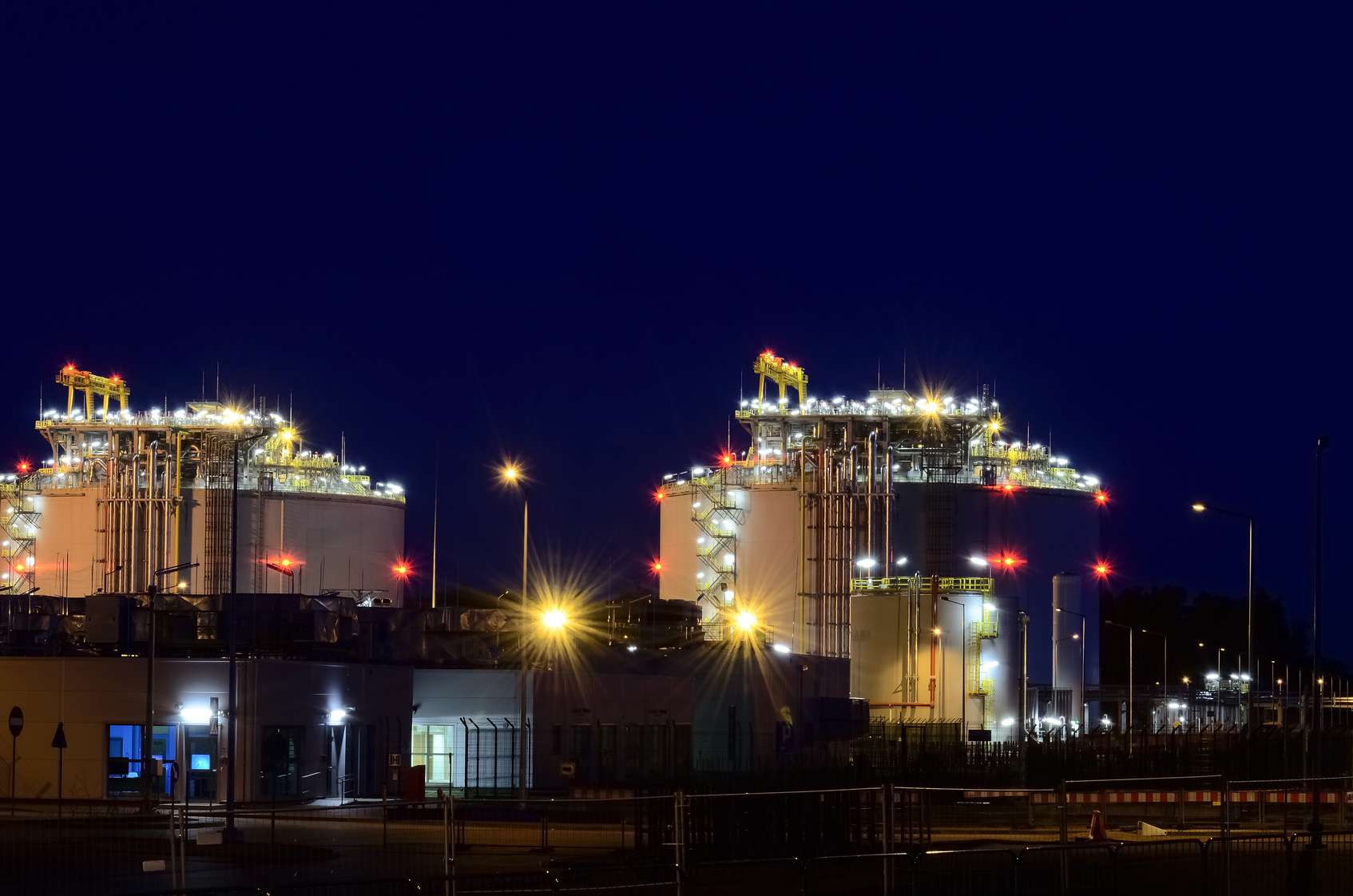
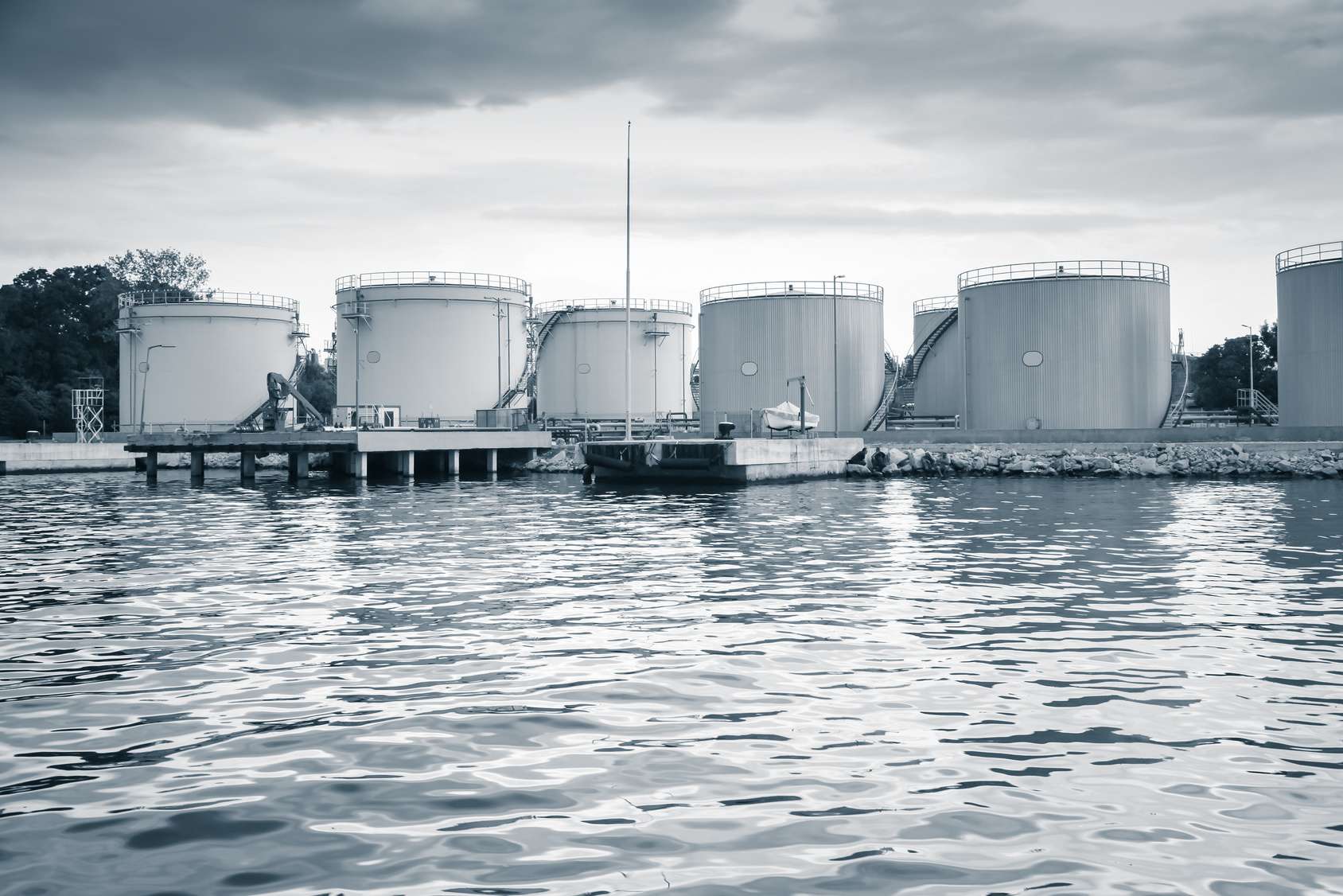
Myth — “The World Is Running Out of Oil Storage”

Our View —

Storage headlines are among the finest examples of how a technically correct number can produce a completely misleading story.

Storage is not one gigantic global bathtub.

Crude oil can be stored at tank farms, refineries, terminals and strategic facilities. Some crude is in pipelines or in transit. Different grades are required in different places. A barrel sitting hundreds of kilometres from the refinery that needs it cannot magically teleport there.

Nor does a tank’s engineering capacity equal the quantity that can practically be filled or withdrawn. Facilities require working capacity, operational headroom and minimum volumes sometimes referred to as tank bottoms.

Cushing, Oklahoma—the delivery point associated with West Texas Intermediate—is especially prone to becoming a media metaphor for the entire petroleum-storage system.

Yet the direction of the scare itself has changed.

During June and July 2026, EIA data showed Cushing inventories falling below 20 million barrels, sufficiently low for the EIA to publish an explanation of operational “tank bottoms”. By 21 August 2026, Cushing stocks stood at approximately 22.4 million barrels.

Compare that with the roughly 54 million barrels held there during the famous 2015 storage scare.

So is storage “full”?

No.

Is storage therefore irrelevant?

Also no.

The correct questions are:

Where is the crude?

What grade is it?

Who controls the tanks?

How much working capacity is actually usable?

Can pipelines, terminals or vessels move the oil to where it is required?

And what is happening to inventories relative to expected supply and demand?

A storage number without logistics is merely a number.


Myth — If International Oil Prices Fall, Petrol Prices in Pakistan Must Fall by the Same Amount

Our View —

This is one of the most persistent misunderstandings in Pakistan.

International petroleum prices are an important component of Pakistani fuel pricing.

They are not the only component.

OGRA’s pricing architecture incorporates international product-price benchmarks and other elements including freight and procurement incidentals, the PKR/US dollar exchange rate, Inland Freight Equalisation Margin, distributor or oil-marketing-company margin, dealer commission and applicable petroleum levies and taxes.

This means that a fall in an international benchmark can be partly offset by:

a weaker rupee;

higher freight;

changes in international refined-product premiums;

changes in levies;

or other components of the domestic price build-up.

Likewise, a stable crude price does not guarantee an unchanged Pakistani pump price.

There is a further misconception here: Pakistan buys and prices petroleum products, not merely abstract barrels of Brent crude. Refining margins, product shortages and regional gasoline or diesel markets matter independently of headline crude prices.

The legally and economically correct approach is therefore to examine the actual price build-up rather than comparing today’s petrol station board with yesterday’s television report about Brent.


Myth — Pakistan Can Simply Discover Enough Oil to Become Energy Independent

Our View —

Exploration matters enormously.

Successful discoveries reduce import dependence, improve foreign-exchange resilience, generate royalties and taxes and create substantial economic value.

But “we merely need to find more oil” is not an energy strategy.

Pakistan’s own Economic Survey 2025–26 records crude-oil extraction of approximately 17.4 million barrels during July–March FY2026, marginally below the equivalent period in the preceding year. Full-year domestic crude production had already fallen from approximately 25.8 million barrels in FY2024 to 22.8 million barrels in FY2025.

At the same time, petroleum-product imports increased to approximately 13.64 million tonnes during July–March FY2026, while domestic petroleum-product demand increased by 3.5 per cent.

The transport sector accounted for 82.5 per cent of that petroleum-product demand.

That does not mean Pakistan should stop exploring.

Quite the contrary.

It means exploration must be understood as one component of energy security, alongside:

domestic production;

refining;

efficient transport;

electric mobility;

public transport;

renewable electricity;

grid investment;

storage;

gas policy;

foreign-exchange management;

and diversification of imported energy sources.

A spectacular discovery would help Pakistan enormously.

It would not repeal the economics of a country of more than 240 million people with rapidly evolving energy requirements.


Myth — Electric Vehicles Are Merely an Environmental Luxury Pakistan Cannot Afford

Our View —

For Pakistan, the strongest argument for electrification may ultimately be economic security rather than environmental idealism.

Pakistan imports substantial quantities of petroleum and pays for those imports in foreign currency.

Every kilometre shifted from imported petrol to domestically generated electricity therefore has potential implications for the current account and foreign-exchange requirement—provided, of course, that the electricity itself is supplied efficiently and that the vehicles and batteries do not simply create another unsustainable import dependency.

The Government’s NEV Policy 2025–30 expressly identifies reduced dependence on imported petroleum as a central objective and targets 30 per cent of new vehicle sales being electric by 2030.

That does not mean every EV policy is economically wise.

Subsidies have costs.

Charging infrastructure requires capital.

Electricity distribution systems must cope with demand.

Battery imports and disposal raise separate questions.

Two- and three-wheelers may electrify much more rapidly than heavy trucks.

And Pakistan must be careful not to create incentives which enrich importers without creating genuine industrial localisation.

But reducing imported-oil consumption in a country chronically constrained by foreign exchange is hardly an eccentric environmental indulgence.

It is an energy-security question.


Myth — Renewables Will Simply Replace Oil Barrel for Barrel

Our View —

Electricity and petroleum are not interchangeable commodities.

A solar panel produces electricity.

It does not directly fuel a Boeing 777, manufacture petrochemical feedstock or move a conventional diesel truck.

For renewables to displace petroleum in transportation, another transformation must occur: electrification.

That requires vehicles, batteries, chargers, transmission infrastructure, distribution capacity and reliable electricity.

Pakistan’s current electricity figures illustrate another important trap: installed capacity is not the same thing as actual electricity generated.

At the end of March FY2026, Pakistan had approximately 49,651 MW of installed electricity capacity, comprising 49.2 per cent thermal, 23.4 per cent hydel, 7.1 per cent nuclear and 20.3 per cent renewables according to the Government’s classification.

Yet actual electricity generation during July–March was approximately 46.9 per cent thermal, 30.1 per cent hydel, 18.5 per cent nuclear and only 4.5 per cent from the category classified as renewables.

Capacity therefore does not equal production.

And production does not automatically equal reliable energy delivered at the time and place it is required.

The transition requires grids, transmission, storage, dispatch reform and pricing structures as much as it requires photovoltaic panels.


Myth — Renewable Energy Means Oil and Gas Investment Is Now Pointless

Our View —

Again, reality is less theatrical.

One can believe strongly in accelerated decarbonisation while recognising that petroleum and gas systems cannot simply be switched off before substitute energy systems exist.

Oilfields decline naturally.

Gas fields decline.

Infrastructure requires maintenance.

Refineries must continue operating while petroleum remains consumed.

The IEA estimates that without investment, output from existing oilfields declines rapidly and substantial new supply is necessary merely to offset depletion.

At the same time, excessive investment based upon an assumption of perpetually rising oil demand can produce stranded assets if electrification and efficiency accelerate more quickly than expected.

Both extremes therefore contain risk.

Under-invest too early and energy security suffers.

Over-invest too late and capital becomes stranded.

The problem confronting policymakers and investors is precisely that the correct pathway sits between those hazards.


Myth — Natural Gas Is Automatically a “Clean” Fuel

Our View —

Natural gas generally produces less carbon dioxide at the point of combustion than coal and can play an important role in flexible electricity generation and industrial energy.

But “clean” is an imprecise word.

Methane itself is a powerful greenhouse gas. Leakage during production, processing, transportation and distribution materially affects the climate performance of natural gas.

Imported LNG also requires liquefaction, shipping and regasification, each carrying infrastructure, cost and energy implications.

Pakistan has particular reasons to care about this distinction because diminishing indigenous gas supply has increased the significance of imported RLNG. During July–March FY2026, average consumption included approximately 2,316 MMCFD of natural gas and 613 MMCFD of RLNG.

Gas can therefore be an important transition and industrial fuel without being treated as environmentally consequence-free.


Myth — Energy Security Simply Means Buying the Cheapest Fuel

Our View —

The events of the 2020s should have destroyed this notion permanently.

The cheapest theoretical energy source is not necessarily the most secure one.

Energy security concerns:

availability;

affordability;

diversification;

infrastructure;

foreign-exchange exposure;

geography;

shipping routes;

storage;

contractual flexibility;

political stability;

domestic production;

and the ability to withstand disruption.

A country obtaining exceptionally cheap energy from a single vulnerable route may be less secure than one paying slightly more for diversified supply.

For Pakistan, the calculation is particularly acute because international energy prices interact with the rupee, foreign-exchange reserves, electricity tariffs, industrial competitiveness and government finances.

The cheapest barrel today may not be the cheapest energy strategy over twenty years.


Myth — Energy Markets Are Really About Geology

Our View —

Geology is merely the beginning.

Oil and gas markets are equally creatures of law.

A petroleum discovery without a legally secure concession is not a bankable petroleum project.

A pipeline without rights of way cannot transport hydrocarbons.

A refinery requires licensing and environmental approvals.

An LNG terminal depends upon regulatory permissions, port access, financing and contractual architecture.

Electricity projects require generation, transmission, distribution and market rules.

International petroleum trade depends upon shipping law, sanctions, insurance, letters of credit and foreign-exchange arrangements.

And in Pakistan, even the constitutional ownership of petroleum contains a sophisticated federal dimension: under Article 172(3) of the Constitution, mineral oil and natural gas situated within a Province or its adjacent territorial waters vest jointly and equally in the Province and the Federal Government, subject to existing commitments and obligations.

Energy policy therefore cannot intelligently be separated from constitutional law, regulation, contract and international affairs.


What 2026 Actually Tells Us About Oil

Perhaps the greatest energy myth is the belief that there must be a single grand answer.

Either oil is the past or oil is the future.

Either EVs are revolutionary or useless.

Either OPEC controls everything or controls nothing.

Either renewables solve energy security or threaten it.

The evidence suggests something much less satisfying—and much more interesting.

The global energy system is undergoing a genuine transition, but transitions do not resemble light switches.

Electric vehicle sales are expanding remarkably quickly, yet the overwhelming majority of vehicles already travelling on the world’s roads still depend upon liquid fuels.

Oil-demand growth has slowed, but different credible models produce radically different long-term outcomes. The IEA’s stated-policy pathway produces a peak around 2030; its current-policy scenario does not. OPEC projects considerably greater long-term consumption.

Global reserves remain immense, but existing fields continually deplete and require investment.

Renewables are expanding, yet grids, storage and electrification determine how effectively renewable electricity can displace fossil fuels.

And Pakistan remains caught in a particularly important version of this transition: a country with indigenous petroleum resources and significant oil and gas expertise, yet substantial import dependence; an electricity system increasingly exposed to renewable technology, yet still heavily reliant upon thermal generation; and an economy for which every imported barrel carries foreign-exchange consequences.

The sensible response is neither hydrocarbon nostalgia nor energy-transition evangelism.

It is optionality.

Explore domestic resources intelligently.

Protect petroleum investment where economically justified.

Accelerate economically rational electrification.

Improve refining and storage infrastructure.

Modernise the grid.

Reduce avoidable energy consumption.

Encourage genuine local manufacturing rather than merely subsidised imports.

Diversify supply routes.

Draft energy contracts for volatility rather than assuming stable prices.

And treat confident twenty-year predictions with the caution that the extraordinary events of 2026 have once again shown they deserve.

Energy markets punish certainty.

The law, investment policy and commercial strategy surrounding them should therefore be built not upon mythology, but upon resilience.


This article reflects energy-market and regulatory information reviewed as at August 2026. Forecasts cited from organisations including the International Energy Agency, United States Energy Information Administration and OPEC represent the respective institutions’ scenarios, methodologies and assumptions and should not be treated as guarantees of future market outcomes.

Josh and Mak International
Your Gateway to Honest and Accurate Legal Advice

For legal advice concerning petroleum concessions, oil and gas regulation, energy projects, foreign investment, energy contracts, regulatory approvals or related disputes in Pakistan:

Email: aemen@joshandmak.com
www.joshandmakinternational.com

By The Josh and Mak Team

Josh and Mak International is a distinguished law firm with a rich legacy that sets us apart in the legal profession. With years of experience and expertise, we have earned a reputation as a trusted and reputable name in the field. Our firm is built on the pillars of professionalism, integrity, and an unwavering commitment to providing excellent legal services. We have a profound understanding of the law and its complexities, enabling us to deliver tailored legal solutions to meet the unique needs of each client. As a virtual law firm, we offer affordable, high-quality legal advice delivered with the same dedication and work ethic as traditional firms. Choose Josh and Mak International as your legal partner and gain an unfair strategic advantage over your competitors.

error: Content is Copyright protected !!
Josh and Mak International
Privacy Overview

Dear website visitor,

We use third-party cookies on our law firm website to enhance your browsing experience and provide you with relevant content and services. Third-party cookies are created by domains other than our website and are used for various purposes, such as tracking website analytics and serving targeted ads. The third-party cookies we use on our website are provided by Google Analytics, a web analytics service provided by Google, Inc. Google Analytics uses cookies to analyze how visitors use our website and provide us with reports on website activity. The information generated by these cookies is transmitted to and stored by Google on servers in the United States. We also use third-party cookies to serve targeted advertisements to website visitors. These cookies are provided by advertising networks and allow us to deliver advertisements that are relevant to your interests. By using our website, you consent to our use of third-party cookies as described in this policy. If you do not wish to accept cookies from our website, you can disable or delete them through your browser settings. However, please note that disabling or deleting cookies may affect your browsing experience and prevent you from accessing certain features of our website. If you have any questions or concerns about our use of cookies, please contact us using the contact details provided on our website. Thank you for visiting our website.

Best regards,

The Josh and Mak Team