
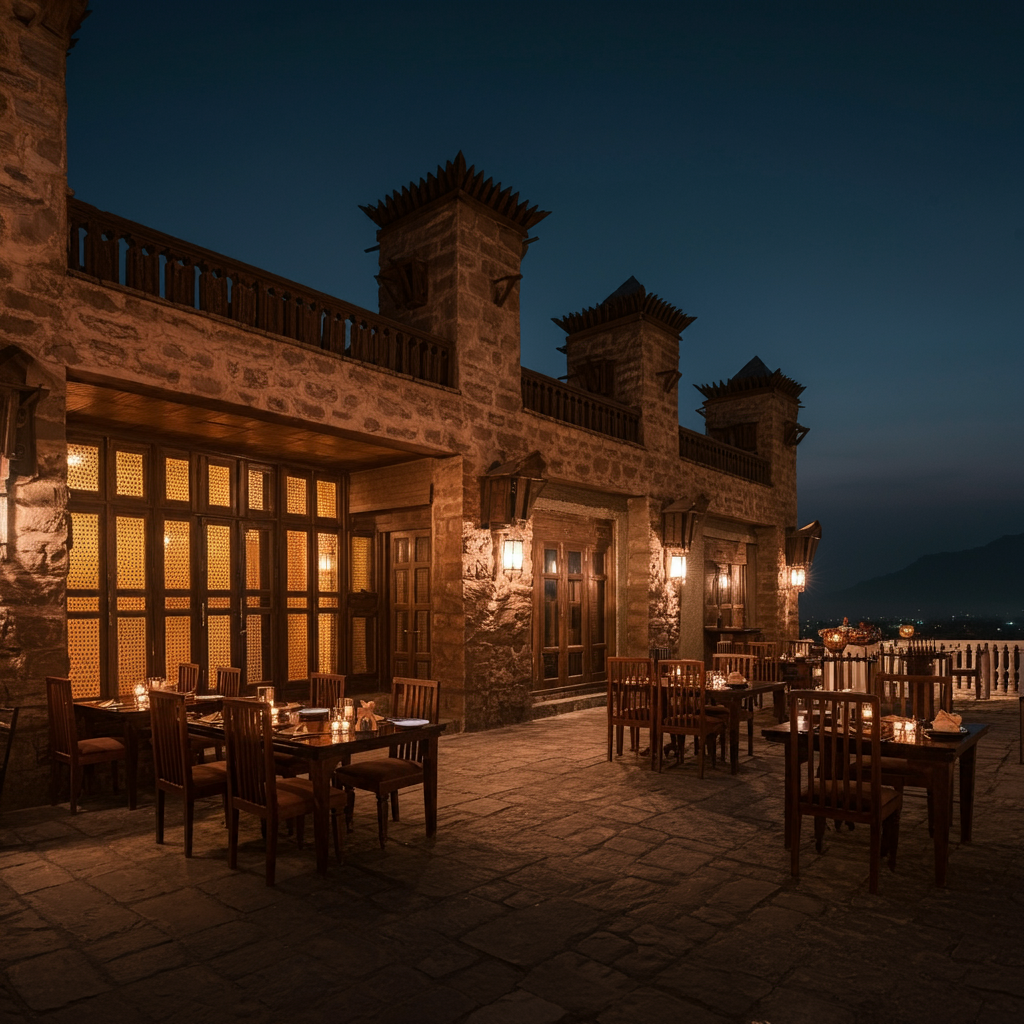
An analysis of the Monal Restaurant litigation, the protection of Margalla Hills National Park, the Federal Constitutional Court’s reversal of the Supreme Court’s judgment, and the constitutional limits of environmental adjudication.
Updated October 2026 | Josh and Mak International
Introduction: A Landmark Environmental Judgment Reconsidered
Few disputes in Pakistan’s recent environmental jurisprudence have generated as much public attention, institutional controversy and constitutional significance as the litigation concerning Monal Restaurant and other commercial establishments situated within Margalla Hills National Park, Islamabad.
What initially appeared to be a decisive judicial intervention against commercial encroachment upon protected environmental land has subsequently developed into a far more complicated legal controversy.
In June 2024, the Supreme Court of Pakistan directed restaurants operating within the relevant parts of Margalla Hills National Park to vacate their premises. Its detailed judgment, delivered on 21 August 2024, endorsed the protection of the National Park and declared the relevant restaurant leases and permissions legally ineffective. Further directions contemplated the demolition of the structures and environmental restoration.
The judgment was regarded by many as a significant affirmation of environmental protection and the rule of law.
However, the subsequent proceedings have fundamentally altered the legal position.
On 13 July 2026, the Federal Constitutional Court of Pakistan allowed review petitions brought by the Capital Development Authority (CDA) and the Metropolitan Corporation Islamabad (MCI), setting aside significant aspects of the Supreme Court’s earlier judgment.
In its detailed reasons issued in October 2026, the Federal Constitutional Court identified serious errors relating to procedural fairness, the proper jurisdiction of civil courts, statutory interpretation, evidential standards and the respective responsibilities of governmental institutions.
The controversy is therefore no longer accurately described as a concluded environmental enforcement case.
It now represents an important study of how environmental protection, constitutional due process, administrative legality, property rights and judicial restraint must operate together.
The central legal question is not whether Pakistan should protect its national parks. That duty is firmly established. The question is how the State and the judiciary must discharge that duty consistently with the Constitution, applicable legislation and the rights of affected persons.
Background: The Monal Restaurant Lease Dispute
The dispute originated in arrangements concerning a restaurant site situated at Gokina Moor, Pir Sohawa, within the Margalla Hills area of Islamabad.
The Monal Group of Companies, through its proprietor Luqman Ali Afzal, entered into a lease agreement with the CDA dated 10 March 2006. The lease contemplated a fifteen-year period commencing on 1 August 2006.
Monal subsequently operated as a prominent restaurant overlooking Islamabad.
In 2019, a dispute arose concerning the ownership and administrative control of the land.
According to the factual background subsequently recorded by the Federal Constitutional Court, the Remount, Veterinary and Farms Directorate (RV&FD), associated with the Pakistan Army, asserted that approximately 8,603 acres of land in the Margalla Hills, including the restaurant site, had reverted to its control with effect from November 2016.
The Directorate demanded rent from the restaurant operator.
The Monal operator maintained that clarification was sought from the relevant public authorities concerning which institution was legally entitled to receive rent.
A further lease agreement was executed with the RV&FD on 30 September 2019, for a stated period of seventeen years.
These competing arrangements produced substantial legal uncertainty concerning the entitlement to lease the property, receive rent and exercise control over the site.
On 27 February 2021, the Monal operator instituted civil proceedings seeking declarations concerning the competing lease arrangements and the CDA’s claimed entitlement to rent.
The Metropolitan Corporation Islamabad subsequently instituted a separate suit seeking possession of the restaurant site.
These proceedings were significant because they involved disputed questions of fact requiring consideration of the relevant documents, governmental authority, property rights and evidence.
They were not merely abstract questions of environmental policy.
The Islamabad High Court Proceedings
Environmental protection proceedings relating to Margalla Hills National Park had been pending before the Islamabad High Court for several years.
Public-interest petitioners challenged governmental failures to protect the National Park from unlawful construction, encroachment and activities allegedly inconsistent with its protected status.
In February 2015, the Islamabad High Court constituted an environmental commission to examine the implementation of the relevant regulatory framework and report on environmental violations.
The commission identified various alleged breaches involving governmental institutions, commercial developments and protected areas.
The Monal dispute subsequently became connected with the broader environmental proceedings.
On 11 January 2022, the Islamabad High Court issued a consolidated decision allowing environmental writ petitions and dismissing the civil revision and first appeal against order pursued by the Monal operator.
The litigation therefore developed along two distinct legal tracks.
One concerned environmental protection and governmental compliance with the statutory framework governing the National Park.
The other concerned private and public-law disputes over lease arrangements, possession and rent.
The subsequent controversy arose partly because conclusions affecting those separate proceedings were addressed together.
This procedural history became central to the Federal Constitutional Court’s eventual reconsideration of the case.
The Supreme Court’s Judgment of June and August 2024
The Monal Group challenged the Islamabad High Court’s decision through Civil Petitions for Leave to Appeal Nos. 304 and 305 of 2022.
On 11 June 2024, a three-member Supreme Court bench comprising Chief Justice Qazi Faez Isa, Justice Jamal Khan Mandokhail and Justice Naeem Akhtar Afghan issued an order concerning restaurant operations within Margalla Hills National Park.
The Court granted three months for the restaurants concerned to vacate.
The order also declared leases, licences, allotments and permissions granted by the CDA, RV&FD or other authorities for restaurant operations within the National Park contrary to the Islamabad Wildlife (Protection, Preservation, Conservation and Management) Ordinance, 1979.
Its detailed judgment followed on 21 August 2024, reported as The Monal Group of Companies v. Capital Development Authority (PLD 2024 SC 925).
The Supreme Court reasoned that the construction and operation of the restaurants were inconsistent with the statutory objectives governing the National Park.
It also examined the role of public authorities in permitting commercial operations and criticised conduct that, in its assessment, had contributed to unlawful encroachment and environmental damage.
The Court directed the Islamabad Wildlife Management Board to assume possession of the relevant restaurant premises and oversee the demolition of the structures, with assistance from the CDA and the Islamabad Capital Territory Police.
It further contemplated restoration of the affected land to its natural condition.
In September 2024, the Supreme Court dismissed review petitions brought by several affected parties.
The restaurants were subsequently closed and the structures demolished.
At that stage, the litigation appeared to establish a broad prohibition against restaurant operations within the protected National Park.
However, the legal foundation of that conclusion would subsequently be reconsidered.
The Federal Constitutional Court’s Reversal in July 2026
The establishment of the Federal Constitutional Court under the Constitution (Twenty-Seventh Amendment) Act, 2025, materially altered Pakistan’s constitutional judicial structure.
Pending matters falling within the newly constituted Court’s jurisdiction were transferred in accordance with the constitutional arrangements.
Among those proceedings were review petitions brought by the Metropolitan Corporation Islamabad and the CDA against the Supreme Court’s August 2024 judgment.
The relevant proceedings were registered as:
Metropolitan Corporation Islamabad and Capital Development Authority v. Monal Group of Companies and Others, C.R.P. No. 825 of 2024 and F.C.R.P. No. 44 of 2025 in C.P.L.A. No. 304 of 2022.
On 13 July 2026, a bench comprising Justice Syed Hasan Azhar Rizvi, Justice Aamer Farooq and Justice Syed Arshad Hussain Shah allowed the review petitions.
The Federal Constitutional Court subsequently issued a 44-page reasoned judgment, authored by Justice Syed Hasan Azhar Rizvi.
The judgment materially changed the legal position established by the earlier Supreme Court decision.
The Court held that the disputed questions concerning ownership, the validity and effect of the lease arrangements, and entitlement to receive rent required adjudication before a competent civil court after proper consideration of evidence.
It rejected the categorical conclusion that any lease or permission for restaurant operations within Margalla Hills National Park was necessarily unlawful.
It also reconsidered the allocation of powers between the CDA and the statutory wildlife conservation authorities.
Most importantly, the Federal Constitutional Court concluded that important rights and liabilities had been determined without observing the requirements of procedural fairness.
The significance of this judgment extends beyond the Monal dispute itself.
It concerns the fundamental question of whether a court may grant extensive consequential relief, including demolition, without first determining the factual and legal matters necessary to justify that relief.
Article 10-A: The Constitutional Right to a Fair Trial
One of the most consequential aspects of the Federal Constitutional Court’s reasoning concerns Article 10-A of the Constitution of Pakistan.
Article 10-A protects the right to a fair trial and due process in the determination of civil rights and obligations.
The Federal Constitutional Court considered that findings of a final and conclusive nature had been recorded in proceedings arising partly from interlocutory orders, notwithstanding the existence of unresolved civil suits.
The Court also addressed the position of persons whose interests had been affected without an adequate opportunity to participate.
This raised the principle of audi alteram partem: no person should suffer an adverse determination of rights without being afforded a fair opportunity to be heard.
The Court considered that the procedural deficiencies were sufficiently serious to warrant review.
The legal principle is important.
An environmental objective, however compelling, does not automatically authorise the displacement of ordinary requirements governing evidence, notice, hearing and jurisdiction.
Conversely, Article 10-A should not be misunderstood as creating substantive immunity from environmental legislation.
A person who has unlawfully occupied protected land or violated environmental restrictions remains subject to appropriate legal proceedings and remedies.
The constitutional requirement is that liability and relief must be determined through lawful procedures.
Environmental justice and procedural justice are complementary constitutional obligations, not competing privileges from which a court must select only one.
The Limits of Judicial Intervention in Pending Civil Disputes
The Federal Constitutional Court’s judgment also addresses the distinction between constitutional review and ordinary civil adjudication.
The validity of a lease may depend upon disputed facts concerning ownership, governmental authority, contractual obligations, possession and the circumstances in which particular documents were executed.
Such matters may require oral and documentary evidence, examination of witnesses and findings under the applicable rules of civil procedure.
Where substantive civil proceedings remain pending, a constitutional court must exercise care before determining those factual issues conclusively.
The Federal Constitutional Court considered that the earlier proceedings had prejudged questions that belonged within the jurisdiction of the competent civil court.
Consequently, it directed that the pending suits be consolidated and decided on their merits, after impleading the Federal Government and giving the parties appropriate opportunities to produce evidence.
It is important, however, to appreciate the distinction between the different orders.
The Federal Constitutional Court did not simply restore every earlier claim or automatically grant the Monal operator an injunction.
The dismissal of the civil revision and first appeal against order, insofar as those proceedings arose from interlocutory civil-court decisions, was not disturbed in the same manner.
The parties were instead permitted to seek fresh interim relief before the competent civil court at an appropriate stage.
Thus, the reversal restored judicial determination of unresolved rights; it did not predetermine their eventual outcome.
The Environmental Commission’s Report and the Law of Evidence
An important aspect of the judgment concerns the treatment of environmental fact-finding reports.
Environmental commissions can perform valuable functions.
They may investigate governmental failures, identify apparent violations, examine ecological conditions and provide technical recommendations.
However, a commission’s findings cannot necessarily be treated as conclusive proof of disputed facts against persons who have not had an adequate opportunity to challenge them.
The Federal Constitutional Court emphasised that allegations of unlawful conduct, environmental damage or institutional misconduct must be assessed through legally appropriate evidential procedures.
A technical or administrative report may support a judicial investigation.
It does not invariably replace that investigation.
This distinction is especially important where the proposed remedy is coercive or irreversible, such as demolition of an existing structure.
The decision does not diminish the value of scientific expertise.
Rather, it requires environmental evidence to be considered within a process that is reliable, fair and capable of producing sustainable judicial conclusions.
Were Restaurants Absolutely Prohibited Within Margalla Hills National Park?
This is arguably the most important substantive issue addressed in the Federal Constitutional Court’s judgment.
The earlier Supreme Court decision had adopted a restrictive interpretation of the legal framework governing the National Park.
The Federal Constitutional Court reconsidered that interpretation by examining section 21 of the Islamabad Wildlife Ordinance, 1979, together with Regulation 4(3)(b) of the Islamabad Capital Territory Zoning Regulations, 1992.
Section 21 recognised the protection of scenery, flora and fauna whilst permitting public access for recreation, education and research, subject to restrictions.
It also contemplated certain public facilities and buildings, provided they did not undermine the purpose of the National Park.
Regulation 4(3)(b) similarly recognised certain land-use activities connected with conservation, preservation, afforestation and recreation.
The Federal Constitutional Court considered that the earlier interpretation had failed to give adequate effect to the statutory recognition of recreation.
The Court reasoned that access to a National Park may reasonably entail facilities serving human needs, including rest, refreshment and sanitation, provided these are properly regulated and environmentally sustainable.
It therefore rejected an absolute proposition that the mere existence of a restaurant within the National Park must necessarily be unlawful in every conceivable circumstance.
However, this reasoning does not establish an unrestricted entitlement to construct or operate restaurants.
The legality of a particular development must be assessed against the applicable statutory restrictions, its actual environmental effects, valid approvals and the powers of the relevant authorities.
A restaurant may be legally impermissible because of its location, construction, scale, environmental impact or non-compliance, even though the statutory framework does not prohibit every conceivable recreational facility.
That distinction is central to the revised legal position.
The Islamabad Nature Conservation and Wildlife Management Act, 2024
The environmental-law framework has also changed since the earlier Supreme Court proceedings.
The Islamabad Nature Conservation and Wildlife Management Act, 2024 replaced the previous wildlife legislation and created an updated statutory framework for nature conservation in the Islamabad Capital Territory.
Section 12 is especially relevant.
Section 12(2) recognises public access to national parks for recreation, education and research, subject to the restrictions and conditions prescribed by the relevant Board.
Section 12(3) contemplates access roads, rest houses, hotels and certain other buildings and public amenities, subject to the Board’s approval upon satisfaction that the activities will not adversely affect conservation and the protection of nature.
However, section 12(4) contains extensive statutory prohibitions, including restrictions relating to clearing land, constructing buildings, damaging vegetation, pollution, waste disposal and other activities harmful to the protected environment.
The opening qualification to section 12(4), together with the specific provisions governing permissible amenities, requires the section to be interpreted as an integrated statutory scheme.
It would be incorrect to isolate the reference to hotels or recreational facilities and conclude that commercial development is automatically permissible.
Equally, the statutory text should not be interpreted as though Parliament had made no provision whatsoever for public facilities.
The appropriate inquiry is whether a particular activity falls within a lawful statutory exception, has obtained the necessary approvals and satisfies the relevant environmental conditions.
The Federal Constitutional Court’s interpretation must therefore be understood as supporting regulated and environmentally compatible recreation, not unrestricted commercialisation of national park land.
The CDA and Wildlife Conservation Authorities: Separate but Complementary Functions
The dispute also exposed uncertainty over the administrative responsibilities of public authorities.
The CDA derives its principal planning and development functions from the Capital Development Authority Ordinance, 1960.
These include functions concerning master planning, zoning, building control and land development within Islamabad.
Wildlife conservation authorities exercise distinct statutory responsibilities concerning the protection of flora, fauna, biodiversity and protected areas.
The Federal Constitutional Court rejected the earlier approach insofar as it displaced the CDA’s continuing jurisdiction over planning, land use and development.
It also set aside the direction that the former Wildlife Management Board was entitled to the disputed restaurant rent deposited before the court.
The Court required amounts withdrawn or recovered under the impugned direction to be returned to the public exchequer, subject to lawful appropriation.
At the same time, the judgment acknowledged the statutory responsibilities of the Nature Conservation and Wildlife Management Board constituted under the 2024 Act.
The critical point is that the existence of CDA jurisdiction does not independently authorise environmentally unlawful development.
Nor does wildlife conservation legislation automatically displace every planning and building-control requirement.
The two regulatory regimes must be read together.
In practical terms, planning permission is not a substitute for environmental authorisation, and environmental approval is not a substitute for lawful land title or building permission.
Judicial Impartiality and Findings Beyond the Evidence
One of the more striking aspects of the Federal Constitutional Court’s judgment concerns the earlier judicial observations about the parties’ personal connections and alleged political influence.
The Supreme Court’s 2024 judgment contained adverse observations concerning certain individuals, officials and institutional relationships.
The Federal Constitutional Court considered that several such observations were not supported by admissible evidence forming part of the record.
It emphasised that judicial conclusions must rest upon pleadings, evidence and applicable law rather than personal information or extraneous considerations.
The Court also addressed the importance of judicial impartiality, including the circumstances in which perceived bias may warrant recusal.
The impugned observations concerning personal relationships and political associations were expunged.
This is particularly important when reporting on the case.
Allegations or observations subsequently expunged by a reviewing court should not continue to be presented as subsisting judicial findings of corruption, nepotism or misconduct.
Such allegations require independent proof through lawful proceedings.
The public interest in institutional accountability remains substantial.
However, accountability must be founded upon evidence rather than assumptions about a person’s relationships, influence or social position.
Allegations Concerning Forest Fires and Environmental Damage
The earlier Supreme Court proceedings also raised serious concerns about damage to the Margalla Hills ecosystem.
These included allegations concerning tree loss, pollution, ecological disturbance, encroachment and the effects of commercial activity.
Such matters unquestionably fall within the legitimate concerns of environmental legislation.
However, the Federal Constitutional Court specifically rejected the attribution of recurrent forest fires to the restaurants in the absence of supporting scientific or admissible evidence.
It distinguished the general occurrence of forest fires from proof that a particular establishment caused them.
This is an important evidential principle.
Environmental harm may have multiple causes, including unlawful construction, human negligence, infrastructure failures and natural conditions.
The legal responsibility of an identified person requires evidence establishing the necessary connection between that person’s conduct and the alleged harm.
The Federal Constitutional Court’s conclusion should not be interpreted as a finding that no environmental damage occurred within the National Park.
Rather, the Court rejected particular adverse conclusions that it considered inadequately established on the record.
The distinction between an environmental concern and proven legal liability must remain clear.
Review Jurisdiction and the Finality of Supreme Court Judgments
The Monal litigation has also become significant for its treatment of judicial review jurisdiction.
Ordinarily, the finality of judgments is essential to legal certainty.
Courts cannot permit parties to reopen concluded litigation indefinitely merely because they disagree with a judicial interpretation.
Review jurisdiction is therefore exceptional.
However, the Federal Constitutional Court emphasised that procedural finality cannot be used to perpetuate a manifest miscarriage of justice.
The Court examined the review framework under the applicable Supreme Court Rules, including the relationship between short orders, detailed reasons and the practical ability of an aggrieved party to formulate proper grounds of review.
It also considered the position of the Metropolitan Corporation’s review petition, which had remained pending whilst other review proceedings were decided.
The judgment illustrates an important distinction between a prohibited attempt to relitigate a matter and a legally maintainable review founded upon substantial error or denial of procedural rights.
The Court did not purport to create a general right to reopen every final judgment.
Its reasoning was directed towards the exceptional circumstances identified in the record, including the effect of the earlier proceedings upon parties whose rights had not been properly adjudicated.
The decision nevertheless has potentially wider significance for litigants concerned with review petitions, interlocutory proceedings and judgments affecting persons who were not adequately heard.
Article 9-A and the Constitutional Right to a Healthy Environment
Pakistan’s constitutional framework now expressly recognises the right to a clean, healthy and sustainable environment.
Article 9-A was inserted into the Constitution through the Constitution (Twenty-Sixth Amendment) Act, 2024.
This development reinforces the constitutional significance of environmental protection.
Previously, environmental rights had substantially developed through judicial interpretation of provisions such as Articles 9 and 14, including the constitutional right to life.
The express addition of Article 9-A provides a distinct constitutional foundation for environmental protection.
The revised constitutional framework is particularly relevant when evaluating the future management of protected areas such as Margalla Hills National Park.
However, environmental rights do not exist in isolation from other constitutional guarantees.
Article 10-A protects fair trial and due process.
Article 9-A protects the right to a clean, healthy and sustainable environment.
A legally coherent interpretation should seek to give effect to both.
A court should neither permit unlawful environmental degradation merely because a commercial operator claims economic loss, nor impose irreversible sanctions without observing the legal requirements governing the determination of rights and liabilities.
Properly administered, constitutional environmental protection should be rigorous, evidence-based and procedurally fair.
Did the Federal Constitutional Court Legalise Monal Restaurant?
No such conclusion follows automatically from the judgment.
The Federal Constitutional Court set aside important findings of the earlier Supreme Court decision and restored the adjudication of disputed civil rights.
It did not conclusively determine that the Monal lease was valid.
Nor did it conclusively establish the operator’s entitlement to resume business on the site.
The original structures had already been demolished.
Any proposal for future construction or operation would therefore require consideration of the applicable land rights, planning laws, conservation legislation, environmental restrictions and necessary permissions.
The Court’s decision removes the earlier categorical judicial prohibition, but it does not remove the statutory safeguards governing Margalla Hills National Park.
The question whether a particular development is legally permissible remains separate from the question whether every restaurant is prohibited as a class.
The distinction should be maintained in reporting, future litigation and commercial decision-making.
What Remains Pending After the Constitutional Court Judgment?
The Federal Constitutional Court directed that the civil suits concerning the site and associated rights be consolidated and determined expeditiously.
It further directed that the Federal Government be impleaded as a party.
The parties were to have a fair opportunity to present their evidence.
The judgment also required pending intra-court appeals arising from the Islamabad High Court proceedings to be decided independently and on their own merits, within the scope of the relief sought.
Consequently, the July 2026 decision did not finally determine all disputes arising from the restaurant’s former operations.
Outstanding legal issues may include the validity and consequences of the competing lease arrangements, entitlement to rent, possession, statutory permissions and any claims lawfully advanced in the pending proceedings.
Questions concerning compensation or other consequential remedies would require separate legal and factual examination.
The setting aside of a demolition judgment does not, without more, establish an automatic entitlement to damages.
Such claims, if pursued, would depend upon the applicable causes of action, jurisdiction, proof of loss, available defences and the final determination of the relevant rights.
As at the date of this update, the Federal Constitutional Court’s reviewed judgment provides the operative framework identified here; the eventual merits determinations in the remitted proceedings should not be anticipated.
The Broader Implications for Environmental and Administrative Law
The Monal controversy offers several enduring lessons for public institutions, litigants and commercial operators.
First, governmental agencies must act within the boundaries of their statutory powers. Public land cannot lawfully be administered solely according to institutional convenience or historical practice.
Secondly, the existence of a lease or other contractual arrangement with a governmental body does not necessarily establish that the proposed land use complies with environmental, zoning and conservation laws.
Thirdly, environmental legislation should be interpreted according to its complete statutory scheme. Conservation duties must not be diminished, but express legislative provisions concerning permissible public amenities must also be given proper effect.
Fourthly, serious allegations of environmental damage or institutional misconduct require legally sufficient evidence.
Fifthly, affected persons must be afforded procedural fairness before courts make conclusive determinations of their rights, particularly where the consequences are severe or irreversible.
Finally, where several authorities possess statutory responsibilities over the same protected area, effective governance requires coordination rather than an assumption that one institution possesses every relevant power.
The result of the litigation is therefore more complex than a contest between private commercial interests and environmental protection.
It concerns the constitutional architecture through which those interests must be evaluated.
A Critical Assessment: Environmental Protection Without Judicial Overreach
The original Supreme Court judgment reflected a legitimate and significant concern: the gradual erosion of protected environmental spaces through weak enforcement, institutional conflict and potentially unlawful commercial activity.
The preservation of Margalla Hills National Park remains a matter of considerable public importance.
Yet environmental adjudication must also respect the boundaries established by law.
The Federal Constitutional Court’s intervention emphasises that even laudable public objectives do not exempt judicial proceedings from the requirements of natural justice and proper statutory interpretation.
There is a danger in treating environmental protection and commercial rights as necessarily irreconcilable.
Commercial activities may be incompatible with a protected area’s legal status or ecological requirements.
Equally, some public amenities may be expressly contemplated by the statutory framework when appropriately limited, regulated and environmentally justified.
The correct judicial inquiry must therefore be both principled and fact-specific.
It must consider whether the development is legally authorised, whether the authorising institution possesses the requisite power, whether the environment is adequately protected and whether affected persons have been fairly heard.
The rule of law requires consistency in all four respects.
There is also a practical lesson.
An irreversible measure such as demolition should ordinarily rest upon a properly established legal foundation. Where legal or factual questions remain unresolved, the consequences of premature judicial action may not be capable of effective correction after the event.
The subsequent reversal of an order cannot restore a demolished building or automatically resolve the consequences for employees, investors, governmental institutions and the wider public.
That reality makes careful adjudication particularly important.
Conclusion: The Enduring Significance of the Monal Restaurant Case
The Monal Restaurant litigation has travelled from environmental public-interest proceedings to a substantial constitutional controversy concerning judicial power, statutory interpretation and procedural fairness.
The Supreme Court’s 2024 judgment emphasised the protection of Margalla Hills National Park and sought to address commercial activity that it considered incompatible with the National Park’s protected status.
The Federal Constitutional Court’s 2026 judgment subsequently corrected important aspects of that approach, particularly the categorical treatment of restaurants, the determination of disputed civil rights, the allocation of statutory authority and findings unsupported by adequate evidence.
Neither development should be reduced to an uncomplicated victory for environmental campaigners or commercial operators.
The deeper significance lies in the relationship between legitimate public objectives and the legal methods through which those objectives are pursued.
Environmental protection must remain effective.
Governmental authority must remain accountable.
Property and contractual disputes must be determined in their proper forums.
And judicial proceedings must satisfy the constitutional requirements of fairness and impartiality.
The enduring lesson is that justice is not strengthened when substantive rights are protected by sacrificing procedural rights, or when procedural rights are invoked to defeat legitimate environmental safeguards.
The Constitution requires a principled accommodation of both.
Legal References and Further Reading
The principal judicial authorities and legislative instruments considered in this analysis include:
- The Monal Group of Companies v. Capital Development Authority and Others, C.P.L.A. Nos. 304 and 305 of 2022, Supreme Court of Pakistan, short order dated 11 June 2024, detailed judgment dated 21 August 2024, reported as PLD 2024 SC 925.
- Metropolitan Corporation Islamabad and Capital Development Authority v. Monal Group of Companies and Others, C.R.P. No. 825 of 2024 and F.C.R.P. No. 44 of 2025, Federal Constitutional Court of Pakistan, short order dated 13 July 2026, with detailed reasons published in October 2026. Federal Constitutional Court — Judgments and Orders (search C.R.P. No. 825 of 2024).
- Islamabad Nature Conservation and Wildlife Management Act, 2024, particularly sections 3 and 12. Official statutory text — Pakistan Code.
- Islamabad Wildlife (Protection, Preservation, Conservation and Management) Ordinance, 1979, particularly section 21, considered as the historical legislation relevant to the original dispute.
- Capital Development Authority Ordinance, 1960.
- Islamabad Capital Territory Zoning Regulations, 1992, particularly Regulation 4(3)(b).
- Constitution of the Islamic Republic of Pakistan, 1973, including Articles 9-A and 10-A, and the applicable provisions concerning constitutional jurisdiction and judicial review.
Legal Advisory Services — Josh and Mak International
Josh and Mak International advises domestic and international clients on constitutional litigation, administrative law, environmental compliance, public land disputes, lease arrangements, property rights and proceedings involving statutory authorities in Pakistan.
Our advisory services include legal opinions concerning governmental authority, commercial developments, regulatory permissions, contested leases, environmental restrictions and judicial remedies.
We assist clients in assessing the legal consequences of administrative decisions, reviewing contractual and statutory entitlements, and developing appropriate strategies for litigation and regulatory compliance.
For professional legal assistance, contact Josh and Mak International, Islamabad, Pakistan.
Website: https://www.joshandmakinternational.com
Email: aemen@joshandmak.com
Disclaimer: This publication is an independent legal analysis prepared for general information and professional discussion. It reflects the reported and judicially documented position reviewed as at October 2026 and should not be treated as legal advice concerning any particular lease, development, regulatory permission or pending proceeding. Readers should verify subsequent judicial orders and obtain case-specific legal advice before relying upon any legal proposition discussed herein.